
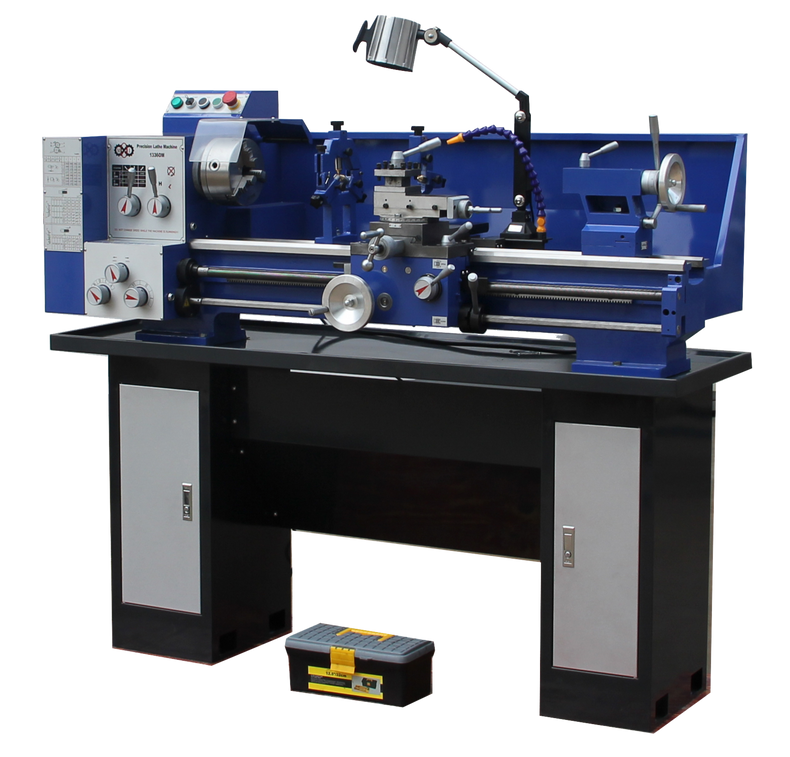
7 Essential Tips for Getting the Most Out of Your Precision Lathe
Whether you're running a busy production shop or a small fabrication facility, your lathe is one of the most versatile and valuable machines on the floor. A well-maintained precision lathe can handle everything from simple facing operations to complex threading work—but only if you're treating it right.
After decades of supplying metalworking equipment to shops across aerospace, automotive, HVAC, and general manufacturing industries, we've learned what separates the shops that get years of trouble-free service from those constantly fighting their equipment.
Here are seven tips that can help you maximize accuracy, extend machine life, and improve your bottom line.
1. Lubrication Isn't Optional—It's Essential
This sounds basic, but it's the number one issue we see when shops call about problems with their lathes. Proper lubrication isn't just about adding oil when you remember—it's about following a systematic schedule.
Daily (every 8 hours of operation):
- Bed ways: 2-3 pumps of way oil (ISO VG 68)
- Leadscrew: 2-3 pumps
- Cross slide ways and lead screw
- Compound slide ways and lead screw
- Tailstock quill
Weekly:
- Check and top off gearbox oil level
- Inspect and clean chuck jaws
- Check belt tension
Every six months:
- Complete oil change (headstock, gearbox, apron)
- Grease spindle bearings with NLGI #2 bearing grease
Pro tip: Don't use automotive motor oil in your lathe. Motor oil contains detergents that keep contaminants suspended—exactly what you don't want. Metal particles should settle to the bottom of the reservoir, not circulate through your machine. Use proper machine oil (ISO VG 32 for headstock, ISO VG 68 for gearbox and ways).
2. Master the 3:1 Rule for Workholding
One of the most common causes of poor surface finish, chatter, and even dangerous situations is improper workholding. The rule is simple:
If your workpiece extends more than 3 times the chucking diameter from the chuck jaws, you MUST support it with the tailstock center or a steady rest.
For example, if you're holding a 2" diameter bar in the chuck, any length beyond 6" needs additional support. This isn't just about accuracy—unsupported long workpieces can flex, vibrate, or in worst cases, come loose entirely.
For work between centers on longer pieces, always apply a small amount of grease to the tailstock center to prevent overheating at the tip.
3. Understand Your Speeds and Feeds
Running at the wrong speed is like driving your car in the wrong gear—you'll get there eventually, but you're causing unnecessary wear and getting poor results.
The formula: RPM = (SFM × 3.82) ÷ Workpiece Diameter
Here are some starting points for cutting speed (Surface Feet per Minute) with HSS tools:
| Material | SFM Range |
|---|---|
| Aluminum | 200-300 |
| Brass/Bronze | 150-300 |
| Mild Steel (1018) | 80-100 |
| Alloy Steel (4140) | 50-80 |
| Stainless Steel (304) | 50-65 |
| Cast Iron | 60-80 |
With carbide tooling, you can typically run 3-4 times faster.
Feed rates matter too:
- Roughing: 0.010" - 0.020" per revolution
- Finishing: 0.003" - 0.007" per revolution
For the best surface finish, your feed rate should be less than half the tool nose radius.
4. Keep Your Tools Sharp and Set at Center Height
A dull tool doesn't just produce poor finishes—it generates excess heat, requires more force (stressing your machine), and can break unexpectedly. Inspect your cutting tools regularly and sharpen or replace them before they cause problems.
Equally important is tool height. Your cutting tool should be set exactly at spindle centerline. Here's why:
- Too high: The tool rubs instead of cutting cleanly, produces poor finish, and can climb the workpiece
- Too low: Creates excessive tool wear and can cause the workpiece to lift in the chuck
- Just right: Clean cutting action, best surface finish, longest tool life
Use a dead center in the tailstock as a quick reference for setting tool height.
Also, minimize tool overhang. The tool should extend from the tool post only as far as necessary—ideally no more than 1.5 times the tool shank height. Excessive overhang causes chatter and can lead to tool breakage.
5. Don't Ignore Chatter—Diagnose It
Chatter is your lathe telling you something is wrong. The vibration pattern leaves distinctive marks on your workpiece and can damage your machine over time. Here's how to troubleshoot:
Common causes and solutions:
| Symptom | Likely Cause | Solution |
|---|---|---|
| Chatter on all operations | Loose gibs | Adjust slide gibs |
| Chatter on long pieces | Inadequate support | Use tailstock or steady rest |
| Intermittent chatter | Tool overhang too long | Minimize extension |
| High-pitched squeal | Dull tool | Sharpen or replace |
| Vibration at certain speeds | Resonance | Change RPM slightly |
If you're experiencing persistent chatter, check that all axes except the one you're feeding are locked. A loose cross slide during longitudinal turning, for example, can introduce vibration.
6. Thread Cutting: Use the Threading Dial Correctly
Threading on a manual lathe intimidates many machinists, but understanding the threading dial makes it straightforward.
The rules:
- Even TPI (8, 10, 12, etc.): Engage the half-nut at any line on the dial
- Odd TPI (9, 11, 13, etc.): Engage only at numbered lines (1, 2, 3...)
- Fractional TPI (11.5, etc.): Engage at the same line every time
- Metric threads: Do NOT disengage the half-nut—reverse the spindle instead
Thread depth calculation: Single depth = 0.6495 ÷ TPI
For example, a 10 TPI thread needs a single depth of 0.065". Take multiple light passes rather than trying to cut to full depth in one or two passes—you'll get cleaner threads and put less stress on your machine.
7. Invest in the Right Machine for Your Work
This might seem self-serving coming from an equipment supplier, but it's genuinely important: using an undersized or worn-out lathe costs you money every day in lost productivity, poor quality, and frustration.
Signs you might need to upgrade:
- Inconsistent dimensions even with careful setup
- Excessive time spent on adjustments and workarounds
- Turning down work because your machine can't handle it
- Frequent repairs eating into your profit margin
- Your lathe is older than your oldest employee
When evaluating a lathe, consider:
- Swing over bed: Determines maximum workpiece diameter
- Distance between centers: Limits workpiece length
- Spindle bore: Important if you run bar stock through the headstock
- Spindle speeds: More range means more versatility
- Threading capability: Both inch and metric if you do diverse work
- Build quality: Cast iron construction and precision bearings pay dividends in accuracy and longevity
The Bottom Line
A precision lathe is a significant investment, but it's also one of the most capable machines in any shop. Treat it well—proper lubrication, correct speeds and feeds, sharp tools, and good workholding practices—and it will reward you with years of accurate, productive service.
At Omni Machine, we supply metalworking equipment to shops that demand precision and reliability. Whether you're looking for a new lathe like our 1336OM Precision Gear Head Lathe or need accessories to get more from your current equipment, we're here to help.
Have questions about lathe selection or operation? Contact our team—we're always happy to talk shop.
Omni Machine LLC | Quality Metalworking Equipment
Serving Aerospace, Automotive, HVAC, Machine Shops & Manufacturing
www.omnimachineinc.com | Pomona, California
Related Reading:
- Understanding Lathe Specifications: What the Numbers Mean
- Choosing the Right Chuck for Your Application
- Maintenance Schedules That Extend Machine Life
© 2025 Omni Machine LLC. All rights reserved.